Fragrance Notes Are Layers Of Scent That Are Layered To Form The Final Fragrance. Fragrance Notes Are Categorised Into Three Main Elements Based On How Long They Take To Evaporate, And How Long They Typically Last Following Application: Top Notes, Heart Notes And Base Notes.
Albizia
Albizia offers a delicate, complex Chypre Floral profile. The scent is intensely fragrant, blending sweet, slightly powdery notes of raspberry, violet, and mimosa with rich nuances of honey, wood, and pollen. It captures an exotic, sweet floral aroma with soft, velvety depth.

Origin & Extraction Of Albizia
Albizia, commonly known as the Silk Tree or Mimosa, is native to Asia and highly valued in traditional medicine and ornamental gardening for its striking pink flowers and delicate, feathery leaves. The scent profile—a complex blend of sweet, powdery floral notes with hints of honey and wood—has been admired for centuries. However, the use of Albizia as a distinct, isolated note in Western fine perfumery is relatively recent. Historically, its qualities were often captured through accords utilizing more common notes like Mimosa or Heliotrope, as extracting a stable and concentrated essential oil from the delicate flowers presented technical challenges.
The note has gained prominence in contemporary and niche perfumery as houses seek to capture more exotic, photorealistic, and specific floral nuances. Modern extraction and synthesis techniques have allowed perfumers to accurately reproduce the delicate, sweet, and powdery depth of Albizia, moving it from a supporting floral accent to a sophisticated central note. Its relevance today lies in its ability to lend a soft, velvety texture and an exotic sweetness to compositions, particularly in the Chypre Floral and Oriental fragrance families, offering a unique complexity that distinguishes it from more traditional floral heart notes.
Extraction Methods of Albizia
Historically, Albizia extracts have been prepared using traditional folk methods such as maceration and infusion. Practitioners often used a "folk style" approach, steeping fresh flowers or the inner bark in solvents like alcohol (vodka or brandy) or water for four to six weeks to create tinctures and medicinal remedies. In traditional Chinese medicine, the bark and flowers were often dried and pounded into a fine powder before being decocted or macerated to capture their therapeutic properties for emotional and physical healing.
Modern extraction techniques utilize more precise and varied methods to isolate specific active compounds like saponins, phenolics, and antioxidants. These include hot Soxhlet extraction using ethanol or hexane for defatting and extracting seeds and leaves, as well as cold maceration with water or hydroethanolic solutions. Recent commercial developments for cosmetic use involve a "cold process" to avoid heat-induced degradation, where plant material is macerated in a specific eluant to create a concentrate that is then stabilized in a glycerin and water base. Advanced laboratory methods also employ column chromatography, such as Sephadex LH-20, and supercritical CO2 extraction to achieve higher purity and concentration of the plant's delicate aromatic and bioactive molecules.
The Albizia note, celebrated for its complex, delicate Chypre Floral profile, has been primarily embraced by contemporary niche perfumery due to the challenges of isolating its scent. This unique aroma—a blend of sweet, powdery raspberry, violet, and honeyed wood—offers perfumers a sophisticated alternative to traditional floral heart notes. It is particularly valued for lending a soft, velvety depth to compositions that seek an exotic yet gentle sweetness, often appearing in modern Oriental and sophisticated Chypre Floral categories.
- *
One notable example that showcases the beauty of this ingredient is Albizia by Phaedon, launched in 2021. This fragrance centers the Silk Tree's delicate, sweet, and powdery facets, positioning the note as the primary focus rather than a mere supporting accent. By highlighting the Albizia, the perfume captures the essence of the 'Silk Flower' itself—an exotic, comforting sweetness that is both luminous and deeply textured, perfect for lending an air of refined elegance.
- *
While Albizia by Phaedon is a direct homage, the characteristics of the Albizia note are often interpreted through accords in broader compositions that utilize similar materials like Mimosa (which Albizia is also known as) and Heliotrope. In modern fragrance development, perfumers leverage its subtle honeyed and wood nuances to create soft transitions between sparkling top notes and richer, sensual bases, ensuring the fragrance maintains a light, uplifting floral character that distinguishes it from heavier, more traditional white florals.
Sustainability Of Albizia
Sustainability of Albizia
- Developing a circular economy by upcycling invasive trees into high-value building materials, wood products, and surfboards to reduce reliance on imports
- Supporting native ecosystem restoration by removing problematic invasive species and replacing them with native or non-invasive trees
- Advancing carbon sequestration and habitat protection through responsible local material sourcing and land management
- Implementing innovative wood engineering, such as glue-laminated panels, to transform weak timber into stable structural components for affordable housing
- Fostering community resilience and local job creation through partnerships in sustainable manufacturing and wood utilization
- Utilizing invasive biomass as a renewable energy source to replace fossil fuel imports and generate local electricity
Trivia
Known as the "sleeping tree," the Albizia julibrissin exhibits a unique behavior called nyctinasty, where its fern-like leaflets slowly fold together at night or during rain as if the tree is going to sleep.
Most Popular Scents Using Albizia
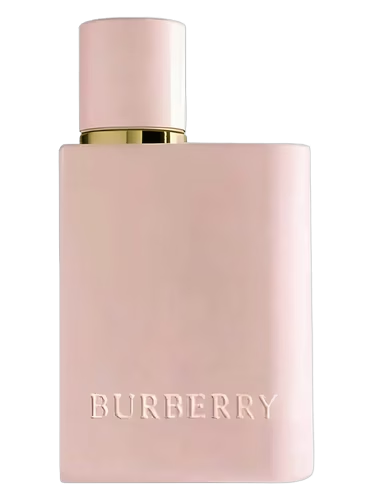
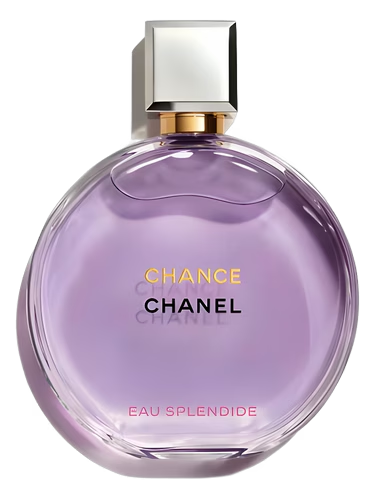
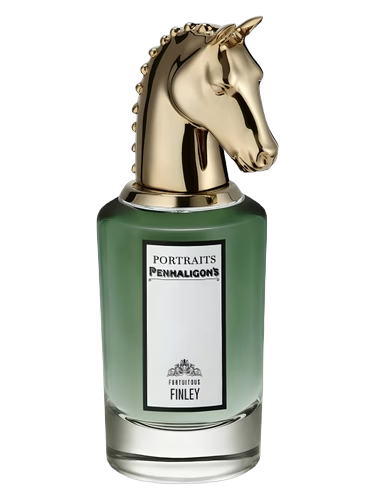
What is Albizia?
Albizia, also known as the Silk Tree or Mimosa, is a deciduous tree native to Asia prized in perfumery for its delicate, exotic, and complex floral profile.What does Albizia smell like?
It offers an intensely fragrant scent that blends sweet, powdery notes of raspberry, violet, and mimosa with rich nuances of honey, wood, and pollen.How is Albizia essence extracted?
Historically extracted through maceration and infusion, modern techniques use precise methods like cold maceration and supercritical CO2 extraction to capture its delicate aromatic molecules.What are some top perfumes featuring Albizia?
Notable fragrances include Phaedon Albizia, Jo Malone London Silk Blossom, Kenzo Eau De Fleur de Soie, and Zadig & Voltaire This Is Her.When is Albizia in season?
The tree typically reaches its aromatic peak during the summer months, specifically from June through August, when it produces its fragrant, plume-like pink or white flowers.