Fragrance Notes Are Layers Of Scent That Are Layered To Form The Final Fragrance. Fragrance Notes Are Categorised Into Three Main Elements Based On How Long They Take To Evaporate, And How Long They Typically Last Following Application: Top Notes, Heart Notes And Base Notes.
Acerola Blossom
Acerola Blossom offers a delicate, luminous floral scent with exotic and fruity undertones, blending a soft, clean blossom aroma with hints of ripe berries and citrus zest. It provides a playful, tangy, and uplifting freshness that suggests tropical vitality and a subtle, mouth-watering sweetness in compositions.

Origin & Extraction Of Acerola Blossom
Acerola (often called the Barbados cherry) is native to Central and South America and has a long history of traditional use in these regions, primarily for its fruit's nutritional and medicinal properties, such as being rich in Vitamin C. However, the Acerola Blossom note, which offers a delicate, luminous floral scent combined with hints of ripe berries and citrus zest, is a relatively modern inclusion in fine perfumery. Its use aligns with contemporary trends that seek to incorporate exotic, vibrant, and photorealistic fruity-floral nuances, moving beyond classic European floral structures.
The note is primarily valued for its ability to introduce a playful, tangy, and uplifting freshness, suggesting a tropical vitality that complements modern light florals and fruity compositions. Unlike historical foundational notes (such as those used in Eau de Cologne), the Acerola Blossom note does not have centuries of documented use. Instead, it serves as a specialized, sophisticated tool for modern perfumers looking to inject unique and mouth-watering sweetness and luminous freshness into their contemporary creations.
Extraction Methods of Acerola Blossom
In the fragrance industry, acerola blossom is primarily considered a fantasy note because no commercial essential oil or absolute is currently extracted from the flowers. Perfumers recreate the scent synthetically using aroma chemicals to evoke its mild, green-fruity sweetness and spring-like floral character. This conceptual approach allows for a consistent olfactory profile that mimics the natural blossoms found in tropical regions like Brazil and the Caribbean.
While the blossom's scent is captured through chemistry, the broader Malpighia genus has a history of physical extraction methods for its fruit. Historically, volatile flavor constituents were isolated from acerola fruit using simultaneous steam distillation-solvent extraction (the Likens-Nickerson method). In modern botanical applications, advanced techniques such as ultrasonic extraction and maceration followed by water extraction are used to create liquid concentrates for skincare, while industrial waste from acerola processing is sometimes treated via hydrothermal carbonization to repurpose the biomass.
Acerola Blossom, prized for its delicate, luminous floral scent with exotic and fruity undertones, is predominantly utilized in modern perfumery to achieve a feeling of tropical vitality and uplifting freshness. Because it is a relatively contemporary note, it is often found in designer and niche lines specializing in bright, light, and airy compositions. These fragrances leverage the blossom's unique scent—which includes hints of ripe berries and citrus zest—to provide a sophisticated, mouth-watering twist to traditional floral or fruity accords. The note’s capacity to blend soft floral elements with a tangy lift makes it a versatile component in creating unique summer or 'vacation-style' scents.
- A key example of the Acerola note (which is closely related to the blossom) appearing in mass-market fragrances is in lines that focus on natural and Brazilian ingredients, such as those by Natura, which features **Acerola e Morango**, and L'Occitane Au Brésil, which released **Flor de Acerola**.
- Another modern inclusion is Shakira’s **S Blush Kiss**, a 2024 release which utilizes Acerola, demonstrating the note’s growing appeal for adding a vibrant, fruity-floral opening to celebrity fragrances.
- The specific Acerola Blossom note often appears in light body mists and refreshing collections, like Avon's **Aquavibe Sonhos de Verão Flor de Laranjeira e Acerola**, where it enhances the transparent and invigorating aquatic-citrus structure.
While the broader Acerola fruit note has found a place in the vibrant, tropical-focused segments of the market, the blossom variation offers perfumers a subtler means of introducing its characteristic scent profile. Its use suggests a movement toward photorealistic, complex floral-fruity scents that diverge from the classic European models of perfumery, prioritizing exotic freshness and a bright, slightly tangy sweetness that is especially suited for contemporary, uplifting compositions.
Ultimately, the fragrances that feature Acerola Blossom utilize its delicate nature to create a luminous, clean, and cheerful opening. Unlike powerhouse florals, this note is designed for diffusion and lightness, complementing accords of light musk, fresh aquatics, or other subtle citruses to maintain an ethereal quality. This focus on refreshing transparency ensures that scents featuring Acerola Blossom are perfect for daytime wear, conveying youthful energy and tropical sophistication.
Sustainability Of Acerola Blossom
Sustainability of Acerola Blossom
- Implementing fair-trade and organic cultivation practices in primary growing regions like northeastern Brazil to ensure ethical labor and environmental standards
- Supporting local economies through careful cultivation and harvesting at peak bloom to preserve flower quality and ensure community resilience
- Promoting a circular economy by repurposing the whole fruit, including the development of skincare innovations like acerola cherry ferment from fruit by-products
- Utilizing sustainable sourcing models that preserve the biodiversity of tropical regions and protect the delicate nature of the Malpighia emarginata tree
- Adopting green chemistry and biotechnology to improve extraction efficiency and reduce the ecological footprint of fragrance production
Trivia
While acerola is a popular fragrance note, it is actually a fantasy note in perfumery, as no commercial essential oil exists for the blossom; perfumers must synthetically recreate its scent using fruity esters and tart acids to mimic its unique "citrus-meets-cherry" aroma.
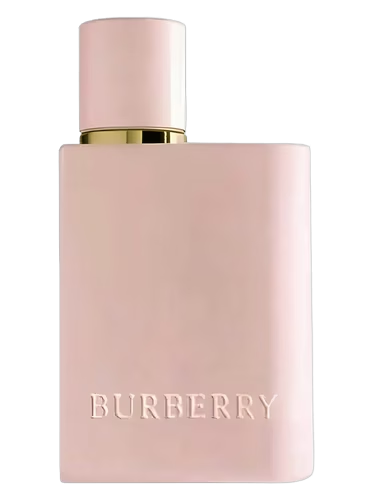
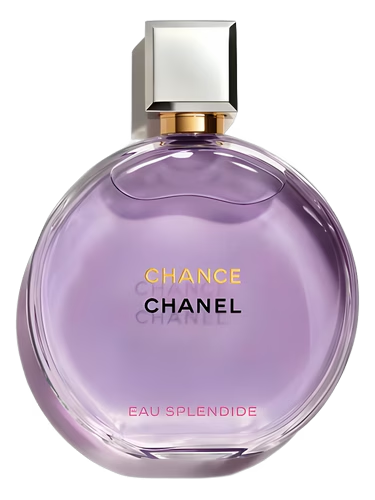
Most Popular Scents Using Acerola Blossom

What is Acerola Blossom?
Acerola Blossom is a delicate floral fragrance note derived from the flowers of the Malpighia emarginata tree, native to Central and South America, and valued for its luminous, tropical character.What does Acerola Blossom smell like?
It offers a soft, clean floral aroma with exotic, fruity undertones of ripe berries and citrus zest, providing a playful, tangy, and uplifting freshness.Is Acerola Blossom a natural or synthetic note?
In perfumery, it is primarily a fantasy note, meaning the scent is synthetically recreated by perfumers using aroma chemicals to mimic the natural blossom since no commercial essential oil exists.What are some top perfumes featuring Acerola Blossom?
Notable fragrances include L'Occitane au Brésil Flor de Acerola, Natura Acerola e Hibisco, Shakira S Blush Kiss, and Avon Aquavibe Sonhos de Verão Flor de Laranjeira e Acerola.When is Acerola Blossom in season?
The acerola tree typically flowers from spring through autumn, particularly between April and November, with the potential for year-round blooming in warm, humid tropical environments.