Fragrance Notes Are Layers Of Scent That Are Layered To Form The Final Fragrance. Fragrance Notes Are Categorised Into Three Main Elements Based On How Long They Take To Evaporate, And How Long They Typically Last Following Application: Top Notes, Heart Notes And Base Notes.
Acerola
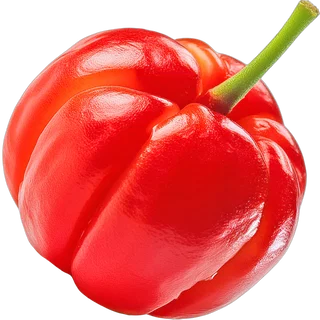
Acerola offers a bright, slightly tart, and juicy scent profile reminiscent of cherry and red berries, with a hint of green freshness. It lends a sparkling, uplifting quality to compositions, often used to enhance fruity and tropical accords in modern perfumery, evoking a vibrant, summery feel.
Origin & Extraction Of Acerola
Acerola, though not a historical cornerstone like classic European citruses, has gained relevance in modern perfumery due to the contemporary demand for naturalistic, invigorating, and exotic fruit essences. Originating in tropical regions, particularly the Caribbean and Central/South America, the fruit itself is globally celebrated as a superfruit rich in Vitamin C. Its incorporation into fine fragrance is a relatively recent development, aligning with the late 20th and 21st-century trend of expanding the olfactory palette beyond traditional notes to include more nuanced, cheerful, and distinctive fruity accords.
The use of Acerola in perfumery is driven by its unique scent profile—a bright, juicy, slightly tart blend reminiscent of cherry and red berries with a hint of green freshness. This profile makes it ideal for modern compositions, especially fruity-florals and tropical scents, where it serves as a sparkling top note. Rather than relying on familiar notes, contemporary brands utilize Acerola to provide a quick burst of luminosity and exotic flair, offering a more complex and uplifting opening that evokes a vibrant, summery feel in sophisticated fragrance structures.
Extraction Methods of Acerola
Historically, acerola extraction focused on simple manual processes to harvest the fruit's potent nutrients. The berries were crushed and the juice extracted under strictly controlled conditions to prevent the rapid oxidation of its high vitamin C content. Traditional home-based methods often involved cooking the fruit in water to extract water-soluble ascorbic acid, though practitioners had to use specific materials like stainless steel or glass to avoid the catalytic destruction of vitamins caused by contact with copper or brass.
Modern commercial extraction has evolved to produce highly stable, concentrated powders and hydrosols for the pharmaceutical and cosmetic industries. Current techniques utilize mechanical pulping followed by vacuum concentration and spray-drying, often incorporating stabilizers like oxidized starch to create non-hygroscopic powders with extended shelf lives. For high-purity applications, latest developments include microwave-assisted extraction, cellular extraction, and steam distillation to yield hydrosols, as well as specialized fermentation and solvent precipitation methods to isolate specific bioactive polyphenols.
Acerola, with its bright, tart, cherry-like scent, is a relatively modern note often utilized to enhance fruity and tropical fragrance compositions, lending a sparkling and vibrant top note. While not a classic foundational note, it is strategically featured in contemporary scents to achieve a specific energetic and summery lift. One notable example showcasing a bright, modern use of this fruit is in **Eau Tropicale** by Sisley.
- **Eau Tropicale** (Sisley)
In modern perfumery, particularly within the 'fruity floral' and 'gourmand' families, Acerola is deployed to add a sophisticated, slightly acidic, red berry facet that stands apart from standard cherry or raspberry notes. Its presence contributes to the overall impression of vitality and sun-drenched sweetness, as exemplified by fragrances such as **Cherry in the Air** by Escada, where the tropical fruit element complements the main cherry accord.
- **Cherry in the Air** (Escada)
The refreshing, juicy quality of Acerola makes it an excellent component for fresh summer limited editions and cheerful colognes. It works especially well when paired with other tropical fruits and light florals to prevent the composition from becoming overly heavy or cloying, ensuring a clean and uplifting dry down. This application is often seen in tropical lines like those from Brazilian houses, such as **Ekos Açaí** by Natura, which captures the lushness of Amazonian fruits.
- **Ekos Açaí** (Natura)
Sustainability Of Acerola
Sustainability of Acerola
- Promoting a circular economy by repurposing waste into high-value bioactive compounds like polyphenols, carotenoids, and pectin for nutraceutical and pharmaceutical use
- Utilizing agricultural byproducts as raw materials for green technology, including the production of biofuels, biogas, and biopolymers
- Adopting sustainable farming practices such as maintaining 5-meter buffer zones near streams to prevent water pollution and using worm composting to recycle food scraps
- Implementing integrated pest management and natural control methods, like using mulch as a weed suppressant and beekeeping to aid pollination
- Establishing germplasm banks to preserve genetic variability and support the long-term resilience of acerola genotypes against climate change
- Developing eco-friendly waste treatment processes like Hydrothermal Carbonization (HTC) to transform residues into hydrochar for environmental pollutant absorption
Trivia
Acerola is considered one of the richest sources of vitamin C among fruits, sometimes exceeding the concentration found in oranges by up to 100 times.
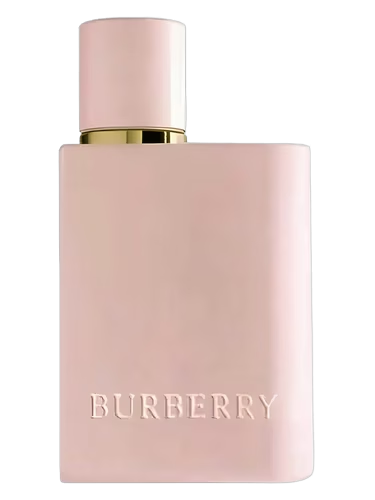
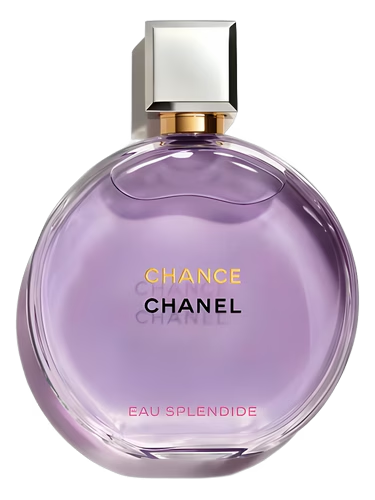
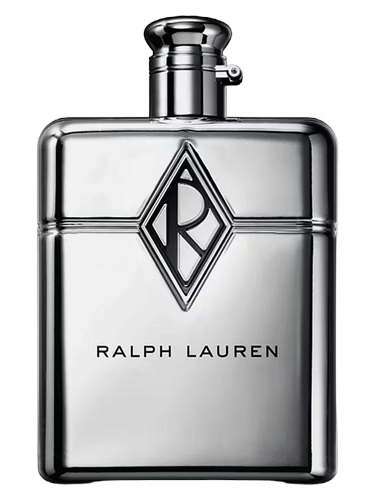
Most Popular Scents Using Acerola
What is acerola in perfumery?
Acerola, also known as the Barbados cherry, is a tropical fruit note valued for its bright, tart, and juicy scent profile that blends cherry and red berry nuances with a hint of green freshness.
What does acerola smell like?
It offers a vivacious and tangy aroma similar to sour cherries or raspberries, characterized by a zesty, citrus-like sharpness and a subtle tropical sweetness.
How is acerola used in fragrance compositions?
It is primarily used as a sparkling top note to provide an immediate burst of luminosity and energetic lift, often appearing in modern fruity-floral and tropical scents.
What are some top perfumes featuring acerola?
Notable fragrances include Sisley Eau Tropicale, Escada Cherry in the Air, L'Occitane Au Brésil Flor de Acerola, and Natura Acerola e Morango.
How is acerola essence extracted?
In modern commercial production, acerola is typically processed through distillation to yield hydrosols or mechanical pulping and vacuum concentration to create stable extracts used in various applications.