← Back to Directory
Neroli
CITRUS SMELLS

Neroli

Odor Profile

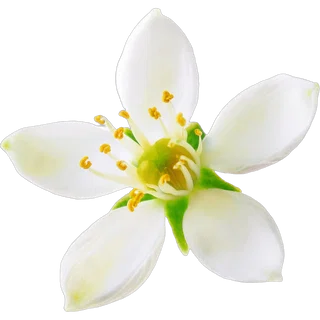
Neroli offers a delicate, sweet floral scent with sparkling citrus accents and fresh, green undertones, extracted from the bitter orange tree's white flowers via steam distillation. It balances floral sweetness and citrus freshness, lending refinement and sophistication to fragrances. This versatile note is widely used in the Fresh and Citrus fragrance families.

History

Neroli oil is derived from the blossoms of the bitter orange tree (Citrus aurantium) and has been a cornerstone in perfumery since the late 17th century. It received its name from the Princess of Nerola, Anna Maria de la Tremoille, who popularized its use to perfume her gloves and bathwater in Italy. Its bright, delicate floral-citrus scent made it an immediate favorite in aristocratic circles, establishing it as a symbol of cleanliness and elegance.

Historically, Neroli's most significant role is as a foundational ingredient in the classic Eau de Cologne structure, developed in the early 18th century. Its ability to combine sparkling freshness with a soft, enduring white floral sweetness is essential to the cologne genre. Today, it remains an indispensable and versatile note in fine fragrance, prized for its use in modern fresh, aromatic, and light oriental compositions where it provides sophisticated lift and a smooth transition between volatile top notes and deeper bases.

Famous Perfumes

Neroli is a foundational element in the history of perfumery, most notably as a core ingredient in the original Eau de Cologne compositions. Its delicate, green-citrus floral profile lends itself perfectly to scents focused on purity and freshness. A quintessential example is **4711 Original Eau de Cologne**, which established the standard for the genre in the 18th century, showcasing Neroli alongside other citrus oils to create an immediately refreshing and uplifting experience that remains popular today.

  • A modern interpretation is found in Tom Ford's **Neroli Portofino**, which elevates the classic Eau de Cologne structure with exceptional quality ingredients, presenting a vibrant, summery, and long-lasting Neroli and citrus accord that is highly celebrated for its bright Mediterranean feel.

Neroli's versatility allows it to transition smoothly between fresh compositions and more elaborate floral or oriental frameworks. In women's perfumery, it often appears as a luminous opening note. For instance, in the classic **Dior Eau Sauvage**, Neroli provides a crisp, elegant bridge between the sharp citrus top notes and the aromatic, woody heart, cementing its status as a timeless masculine/unisex staple. In contrast, the modern floral scent **Elie Saab Le Parfum** uses Neroli to enhance the honeyed white floral heart, adding a sparkling, radiant quality to the overall composition.

  • Beyond colognes, Neroli is critical in high-end niche fragrances for its complexity. **Acqua di Parma Colonia** is another signature piece where Neroli is prominently featured, providing the distinctive, sophisticated floral lift that defines the brand's elegant Italian freshness.

The note also plays a crucial, subtle role in heavier compositions, preventing them from becoming too dense. Its presence provides necessary airiness and lift. For example, in scents like **Guerlain Jicky**, Neroli offers a clean counterbalance to the heavier notes of vanilla and civet, demonstrating its ability to add refinement across different fragrance families. Whether central or supportive, Neroli ensures a fragrance possesses a vibrant, natural brightness.
Origin

Southeast Asia, specifically the Himalayan foothills; now primarily cultivated in Tunisia, Morocco, Italy, Egypt, and France.

Extraction

Distilled

Extraction Description

Extraction Methods of Neroli

The primary method for extracting neroli essential oil is steam distillation of the fresh blossoms from the bitter orange tree (Citrus aurantium). This process, traditionally refined by the Middle Eastern polymath Avicenna, involves passing steam through the hand-picked flowers to release volatile aromatic compounds. As the vapor condenses, the essential oil floats to the top of the distillate and is collected, while the remaining fragrant water is preserved as neroli hydrosol (orange flower water). Historically, the labor-intensive method of enfleurage—using odorless fats to capture the scent—was also employed, along with basic hydrodistillation where flowers were boiled directly in water.

Modern extraction has expanded to include solvent extraction and high-pressure CO2 extraction, which produce a more concentrated "absolute" with a deeper, more complex profile compared to the lighter distilled oil. Recent technological developments also explore advanced techniques such as LED light irradiation of the blossoms prior to extraction and microwave-assisted processes to improve yield and purity. While traditional steam distillation remains the industry standard for producing true neroli oil, these newer methods allow for a broader spectrum of aromatic molecules to be captured for high-end perfumery.

Did You Know?

Neroli oil was named after Anne Marie Orsini, the 17th-century Princess of Nerola, who popularized the scent by using it to perfume her gloves and bathwater. It is also rumored to be one of the secret ingredients in the closely guarded recipe for Coca-Cola.

Top Perfumes

Tom Ford Neroli Portofino, Chanel Coco, Hermes 24 Faubourg, Prada Infusion de Neroli, Creed Neroli Sauvage, Hermes Eau de Neroli Dore, Diptyque L'Eau de Neroli, Bvlgari Man Wood Neroli, Guerlain Aqua Allegoria Nerolia Vetiver, Kilian Love Don't Be Shy, Byredo Sundazed, Le Labo Neroli 36, Maison Crivelli Neroli Botanica, Matiere Premiere Neroli Oranger, Floris Neroli Voyage

Order

37

Sustanability

Sustainability of Neroli

  • Utilizing circular economy principles by repurposing distillation residues as natural fertilizers for future crops to close the production loop
  • Innovative upcycling of post-distillation orange flower water by blending it with essential oil to create highly potent extracts while reducing waste
  • Reducing environmental impact by implementing advanced extraction methods that require significantly lower volumes of flowers compared to traditional oil production
  • Supporting socio-economic resilience for thousands of families through long-term partnerships with local producers that ensure transparency and fair trade
  • Promoting biodiversity and ecosystem preservation through responsible sourcing policies and the use of traceable, organic essential oils

Seasonality

The seasonality of neroli is defined by a fleeting and precise annual bloom window, typically concentrated in the spring months of March, April, and May. For the bitter orange trees of North Africa and the Mediterranean, the primary harvest begins as early as late March and extends through early May, while in regions like southern France, it may last into June depending on weather conditions. This critical period lasts only three to four weeks, during which the delicate white blossoms must be hand-picked on warm, sunny days when they are just beginning to open. Because the flowers lose their volatile aromatic compounds immediately after separation from the tree, they must be distilled within hours of harvest, making neroli one of the most time-sensitive and logistically demanding seasonal notes in perfumery.