Fragrance Notes Are Layers Of Scent That Are Layered To Form The Final Fragrance. Fragrance Notes Are Categorised Into Three Main Elements Based On How Long They Take To Evaporate, And How Long They Typically Last Following Application: Top Notes, Heart Notes And Base Notes.
Green Plum
Green Plum offers a crisp, vibrant, and juicy aroma, combining refreshing sweetness with an energizing, tart, and slightly green edge. It provides an uplifting, sophisticated fruit note that stands out in compositions, lending a unique, mouth-watering freshness and playful complexity.

Origin & Extraction Of Green Plum
The use of plum notes in perfumery, generally associated with a deep, rich, and often dried fruit aroma, has roots in the classic chypre and oriental families. However, the specific interpretation of "Green Plum," which emphasizes a tart, crisp, and fresh scent profile, is a more recent development in modern perfumery. This distinction moves away from the traditional heavy fruit accords, allowing perfumers to utilize plum's complexity to create uplifting, sophisticated top and heart notes.
Green Plum gained traction in contemporary fragrance as part of a trend toward fresher, more naturalistic fruit and green accords, often appearing in niche and designer compositions seeking a bright, energetic opening that is less common than traditional citrus. The note is valued for its ability to convey both mouth-watering juiciness and a subtle, herbaceous greenness, lending a unique vitality and complex tartness to fragrances without relying on synthetic aldehydes for lift.
Extraction Methods of Green Plum
Historically, green plum essence and syrups were primarily obtained through traditional sugar-saturation and fermentation processes, such as the Korean maesil-cheong method. This involves layering fresh plums with sugar in a 1:1 ratio and allowing them to sit for approximately 90 to 100 days. During this time, the sugar acts as a pickling agent to draw out the fruit's juices and nutrients through osmotic pressure, often followed by a period of natural fermentation to develop complex flavors and beneficial probiotics. Other traditional methods involved boiling the fruit juice for extended periods—up to 72 hours—to refine it into a thick, pasty emulsion or medicinal-grade concentrate.
Modern commercial and laboratory extraction techniques have evolved to improve efficiency and preserve delicate bioactive compounds like phenolic acids and flavonoids. Advanced methods include Accelerated Solvent Extraction (ASE) using ethanol or water, which has been identified as highly effective for capturing antioxidants, and Ultrasound-Assisted Extraction (UAE) or Enzyme-Assisted Extraction (EAE). Additionally, industrial production now utilizes controlled candying processes with temperature-regulated hot boiling and cold soaking to prevent unwanted fermentation while ensuring high juice yields and a clear, transparent final product without the need for additional debittering treatments.
The Green Plum note is a relatively modern and sophisticated inclusion in perfumery, favored for its crisp, tart, and vibrant freshness that moves away from the heavier, dried plum accords of traditional compositions. This bright profile makes it excellent for contemporary fragrances seeking an energetic and uplifting opening, often appearing in niche and high-end collections. It provides a unique, mouth-watering juiciness that adds a complex vitality without the typical sweetness of ripe fruit, serving as a distinctive element in compositions.
- In the niche space, the Green Plum note is celebrated for adding a refined, sophisticated twist. Fragrances like **Be My Plum** by Montale and the Japanese-inspired scent **Winter Wine 冬之酒 南柯记 Nankeji** showcase how this note can provide complexity and longevity to a fruit accord.
While the note of general 'Plum' has historical context in deep Oriental and Chypre structures (like Tom Ford's famous **Plum Japonais**), the 'Green Plum' distinction emphasizes the unripe, zesty, and green aspects of the fruit. This focus on freshness makes it popular in modern designer and niche houses that aim for a clean, naturalistic, and sparkling impression. Its slightly herbaceous and tart character allows it to bridge citrus top notes with floral or light woody hearts.
- Newer and more dynamic releases also highlight this note. Upcoming fragrances such as **Jeho** and **Eau de Chilsung Vintage Coral** by Salon de Nevaeh, and **Iridescence Sand** by YCZ demonstrate its growing relevance as a bright, complex, and energizing element in current fragrance trends, often appealing to those seeking a unique twist on fruity freshness.
The versatility of Green Plum allows it to seamlessly transition across genres, from light, airy colognes to deeper, oriental-fruity compositions. It adds a sophisticated layer of complexity to fragrances from houses like Hermès and Prada, which occasionally incorporate fresh, tart fruit nuances to modernize their classic structures. Its use is a hallmark of perfumes designed for invigorating, warm-weather wear, providing a lasting impression of vibrant, slightly tart elegance.
Sustainability Of Green Plum
Sustainability of Green Plum
- Prioritizing eco-friendly practices by using responsibly sourced ingredients to protect natural ecosystems
- Implementing ethical sourcing strategies that support biodiversity conservation and the well-being of the environment
- Adopting green chemistry principles to minimize waste and reduce the carbon footprint during the fragrance manufacturing process
- Partnering with local communities and botanists to promote regenerative agriculture and ensure fair trade practices
- Focusing on circular economy initiatives, such as the use of recyclable packaging and refillable perfume options to reduce glass and plastic waste
Trivia
The green plum note in perfumery is typically a "fantasy note" created synthetically in a lab using damascones—the same family of molecules found in roses—because the natural fruit cannot produce a usable essential oil for fragrance.
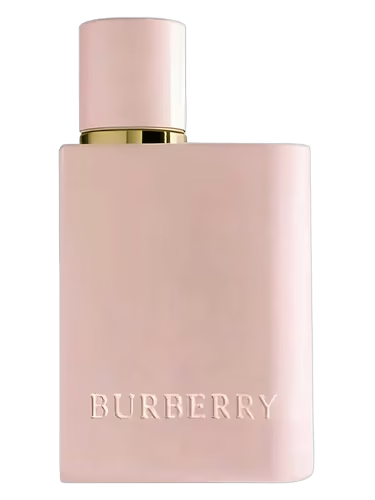
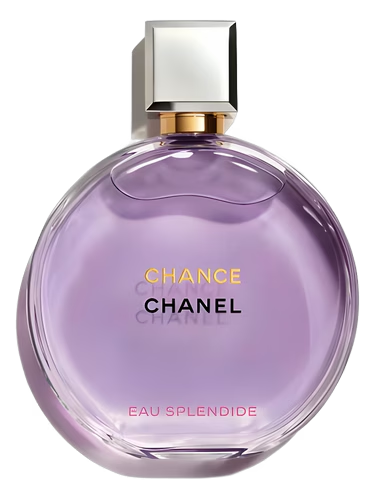
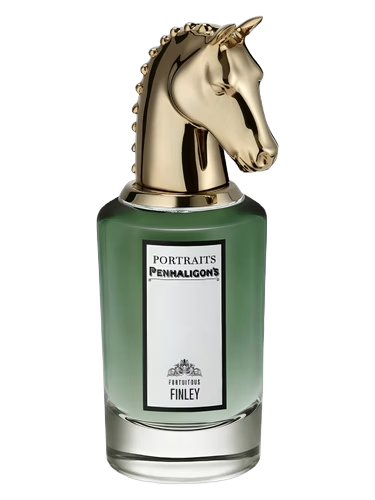
Most Popular Scents Using Green Plum
What is Green Plum?
Green Plum is a crisp and tart fragrance note that represents the unripe version of the plum fruit, offering a more vibrant and energetic profile than traditional deep plum accords.What does Green Plum smell like?
It features a crisp, vibrant, and juicy aroma that combines refreshing sweetness with an energizing, tart, and slightly herbaceous green edge.How is the Green Plum note created in perfumery?
Because the natural fruit cannot produce a usable essential oil, it is typically a fantasy note created synthetically in a lab using damascones, which are also found in roses.What are some top perfumes featuring Green Plum?
Popular fragrances highlighting this note include Marc Jacobs Decadence, Montale Dark Purple, Tom Ford Plum Japonais, and Chloé Nomade.When is Green Plum in season?
The seasonality is brief, typically spanning from April through July, as the fruits are regular plums harvested early before reaching full maturity.